Why the WC Toilet, Paper, Brush Vector Illustration Is a Must-Have for Modern Hygiene-Focused Design
In the crowded visual landscape of public signage, brand communication, and interior marketing, subtlety often wins. A well-designed restroom icon or hygiene graphic must communicate instantly, often across cultural and language barriers. The WC Toilet, Paper, Brush vector illustration — a clean front-view outline featuring a toilet bowl, paper roll, and brush — has emerged as a quiet but essential tool for designers, facility managers, and content creators who value clarity, universality, and minimalism. This article explores why this specific visual asset is gaining traction, how it fits into broader trends in sanitary design and branding, and what it reveals about changing expectations in hygiene communication.
Understanding the WC Toilet, Paper, Brush Vector Illustration
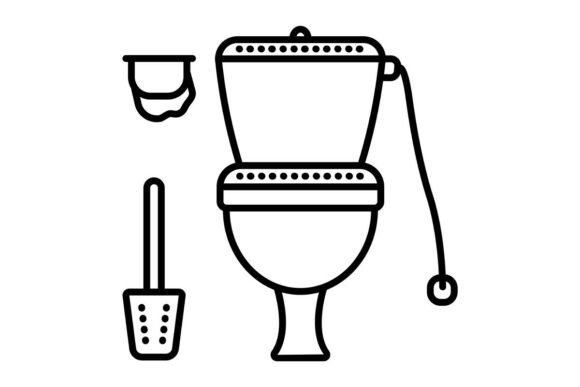
At its core, the WC Toilet, Paper, Brush is a black line vector illustration that depicts a standard WC room setup in front view. It includes a toilet bowl, an adjacent paper roll, and a cleaning brush — all rendered in a clean, minimal outline style. Unlike more decorative or realistic renderings, this illustration strips away unnecessary detail, focusing on essential forms that are instantly recognizable.
The power of this design lies in its simplicity. In an era where information overload is the norm, icons and vector graphics that communicate in a fraction of a second are invaluable. This illustration does not require labels, translations, or explanatory text. Its straight-on perspective and careful proportions make it suitable for contexts where legibility and speed of comprehension are critical — from restroom signage in airports to instructional graphics in hotel rooms or restaurant washrooms.
What Makes the Illustration Distinctive
Several key attributes define the WC Toilet, Paper, Brush vector and explain its rising relevance:
- Uncluttered front-view composition that avoids perspective distortion, ensuring easy recognition at small sizes or from a distance.
- Black line style that conforms to widely accepted iconography conventions, making it accessible across cultures and regulatory environments.
- Inclusion of paper roll and brush alongside the toilet, signaling a complete hygiene readiness rather than just a fixture.
- Minimalist aesthetic that aligns with contemporary design preferences in branding, infographics, and interior documentation.
- Vector format that scales infinitely without loss of quality, suitable for print, digital, and environmental graphic applications.
These characteristics are not accidental. They reflect a careful consideration of how modern audiences consume visual information — quickly, on varied devices, and often in contexts where attention is divided.
How the WC Toilet, Paper, Brush Fits Into Broader Industry and Design Trends
The rise of minimal iconography in hygiene and sanitation spaces is not an isolated phenomenon. It is part of a larger shift toward universal design, globalized communication, and visual efficiency that spans multiple industries.
Public Signage and the Push for Universal Symbols
Public restroom signage has evolved significantly over the past decade. Many municipalities and transportation hubs now require symbols that are understood across languages and literacy levels. The WC Toilet, Paper, Brush vector fits naturally into this trend. By including the cleaning brush and paper roll, it goes beyond simply indicating a toilet location. It signals that the facility is equipped for proper hygiene — a subtle but important reassurance for travelers, event attendees, and customers.
In sectors such as hospitality, healthcare, and education, where restroom cleanliness is a proxy for overall quality, this kind of visual shorthand is increasingly valued. A clean, minimal icon can communicate standards and maintenance expectations without a single word.
Branding and Interior Documentation in Commercial Spaces
For hotel chains, restaurant groups, and corporate offices, consistent visual language across all touchpoints is a branding priority. The WC Toilet, Paper, Brush vector offers a neutral yet professional graphic that can be integrated into restroom directories, cleaning checklists, guest guides, and maintenance manuals without clashing with brand identity.
Interior designers and facility managers often use such vector illustrations in floor plans or wayfinding systems. The inclusion of the brush and paper roll provides a complete picture of the restroom layout, aiding both user navigation and operations planning. This level of detail is especially useful in large facilities where standardization across multiple restroom locations is required.
Infographics and Educational Content
Hygiene-related infographics — whether for public health campaigns, corporate wellness programs, or educational materials — depend on clear, non-intimidating visuals. The WC Toilet, Paper, Brush outline is ideal for these contexts. Its minimal style reduces visual noise, allowing the reader to focus on the instructional content rather than decorative flourishes.
For example, an infographic about proper restroom cleaning procedures might use this vector to indicate the specific fixture being referenced. A guide for new hospitality staff could embed the illustration in a step-by-step protocol, reinforcing correct cleaning sequences. The simplicity of the design makes it suitable for both print handouts and digital slides.
Why People Are Paying Attention to Minimal WC Vector Graphics
Several converging factors explain the growing interest in illustrations like the WC Toilet, Paper, Brush among professionals, creators, and marketers.
Evolving Consumer Expectations Around Hygiene Transparency
Post-pandemic, consumers are more attuned to hygiene cues in public and commercial spaces than ever before. Restroom cleanliness is no longer a background consideration — it is a visible indicator of competence and care. Business owners and facility managers are under pressure to demonstrate attention to sanitation, and visual communication plays a role in that.
Using a vector that shows not just a toilet but also a paper roll and brush sends an implicit message: this facility is stocked, maintained, and ready for use. In sector-specific terms, this aligns with the concept of signaling theory in consumer behavior — where visual cues influence trust and perceived quality. A minimal but complete icon can function as a trust signal in contexts where verbal messages might be overlooked.
Changing Workflows in Design and Content Creation
Freelancers, in-house designers, and marketing teams are increasingly working with modular asset libraries. A reusable vector like the WC Toilet, Paper, Brush saves time and ensures consistency across projects. Instead of commissioning custom illustrations for every restroom-related graphic, teams can pull a standardized vector that meets their needs without additional cost or lead time.
This efficiency is particularly valuable for agencies managing multiple client accounts or for content creators producing hygiene-themed printables, blog posts, or social media assets. The vector format also allows easy customization — changing line weights, adding accents, or adjusting scale — without compromising the core design.
Alignment With Minimalist Aesthetic Trend
The broader design world continues to favor minimalism. Clean lines, negative space, and monochrome palettes dominate UI design, branding, and editorial layouts. The WC Toilet, Paper, Brush vector naturally complements this aesthetic. It does not introduce visual clutter or compete with other design elements. Instead, it plays a supporting role, communicating essential information without drawing attention away from the main content.
This is especially relevant for hygiene-themed printables, such as cleaning schedules, restroom door signs, or instructional posters. In these contexts, the graphic should be informative without being distracting. A minimal outline achieves exactly that balance.
Practical Applications and Observations
To understand the real-world value of the WC Toilet, Paper, Brush vector, consider how it is being used across different sectors.
Restaurant and Hospitality Guides
Many restaurant chains provide restroom comfort packs or guest information cards that include hygiene reminders. The vector illustration can appear on these materials as a visual anchor, consistently reminding guests that the establishment prioritizes cleanliness. Similarly, hotels use such graphics in in-room directories or welcome booklets, listing available amenities including well-stocked restrooms.
Observations from hospitality consultants suggest that guests perceive restroom quality as a direct reflection of overall service standards. A simple icon that communicates preparedness can contribute to a positive impression before a guest even uses the facility.
Public Restroom Signage and Wayfinding
In transportation hubs, arenas, and shopping centers, wayfinding signs often rely on standardized symbols. Authorities increasingly prefer graphics that indicate more than gender — they want to show facility features such as accessibility, baby changing stations, and hygiene supplies. The WC Toilet, Paper, Brush vector can be used alongside other icons to indicate a fully equipped restroom, reducing user confusion and improving the overall experience.
Facility managers report that clear signage reduces maintenance queries and helps users self-serve, especially when it comes to locating paper supplies or cleaning tools. A well-placed icon can save staff time and improve user satisfaction.
Sanitary-Themed Printables and Digital Resources
Educators, health communicators, and content creators produce a range of sanitary-themed printables — from handwashing posters to toilet training cards for children. The WC Toilet, Paper, Brush vector is a natural fit for these resources. Its clarity makes it suitable for audiences of all ages, and its neutral style avoids cultural assumptions about restroom design.
For professionals creating multilingual or low-literacy materials, the illustration reduces reliance on text, making instructions more accessible. This aligns with universal design principles that benefit all users, not just those with language limitations.
Connecting the Topic to Larger Developments in Hygiene and Design
The interest in minimal representation of WC elements is part of a larger movement toward visual standardization in sanitation. As the world becomes more connected, the need for shared visual languages grows. Icons that work in Tokyo, London, and São Paulo without translation are not just convenient — they are increasingly necessary for globalized communication.
Furthermore, the push for sustainable design extends to graphics. Minimal vectors consume less digital storage, load faster on websites, and use less ink when printed. The WC Toilet, Paper, Brush illustration, with its streamlined black line approach, embodies this efficiency. It is a responsible choice for environmentally aware creators and businesses.
Technology also plays a role. As augmented reality, digital directories, and mobile wayfinding become more common, vector illustrations that scale cleanly across platforms will be foundational. The same icon that appears on a printed door sign can be deployed in a mobile app or a smart building interface without recosting or redesign.
Finally, the broader consumer trend toward hygiene mindfulness shows no signs of waning. Businesses that communicate cleanliness effectively will maintain a competitive edge. Visual tools that support this communication — including minimal vector illustrations — are likely to see sustained demand.
Conclusion
The WC Toilet, Paper, Brush black line vector illustration is far more than a simple graphic. It is a response to shifting expectations around hygiene communication, design efficiency, and universal accessibility. For professionals across hospitality, facility management, content creation, and branding, it offers a practical, scalable, and visually coherent way to represent restroom readiness. By understanding the trends and needs that make this illustration relevant, creators and marketers can use it not just as a static asset, but as a strategic tool in building trust, clarity, and consistency in their visual communications.