How 3D Medical Healthcare Icons Are Transforming Visual Communication in Modern Medicine
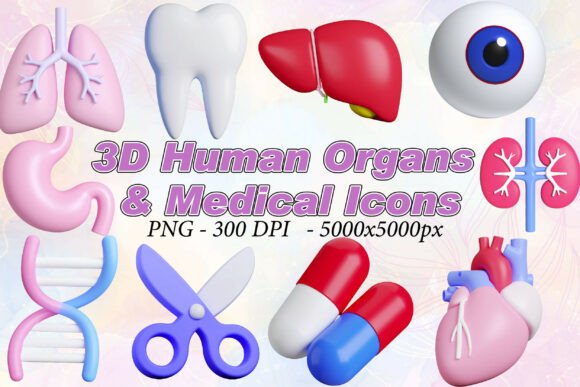
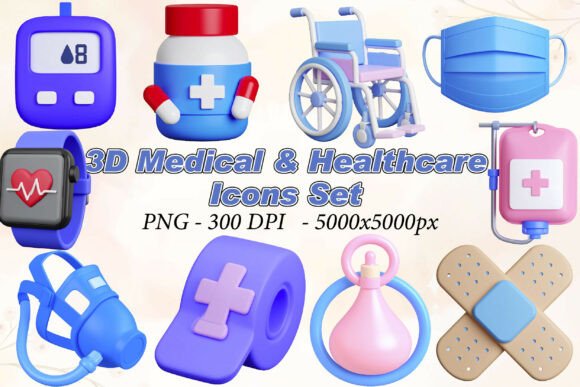
In an era where digital touchpoints define patient experience and professional communication, the visual language of healthcare is undergoing a quiet revolution. Gone are the days when flat, pixelated clip art sufficed for hospital presentations, telehealth interfaces, or educational materials. Today, professionals across the medical ecosystem—from clinicians and health tech entrepreneurs to marketers and educators—are embracing a new standard: high-fidelity, three-dimensional imagery that conveys clarity, trust, and modernity. At the heart of this shift lies the 3D Medical Healthcare Icons set, a curated collection of essential medical graphics rendered in a polished 3D style. This set includes stethoscopes, syringes, hospital beds, thermometers, ambulances, pills, test tubes, heart monitors, and more—each crafted with smooth shading, vibrant colors, and high-resolution precision. But beyond its aesthetic appeal, this icon set represents a broader movement toward immersive, user-centered visual assets that meet the demands of today’s fast-paced, multi-platform healthcare landscape.
The Evolution of Visual Communication in Healthcare
Medical visuals have always been critical for explaining complex concepts, but the tools for creating them have evolved dramatically. A decade ago, most healthcare graphics were either simple line icons or realistic photographs—both with significant limitations. Line icons could feel cold and ambiguous, while photographs often required careful cropping and lacked scalability. The rise of flat design simplified things, but it also stripped away depth and context. Now, with the adoption of 3D modeling and rendering technologies, a new category has emerged: icons that occupy a middle ground—detailed enough to be instantly recognizable, yet clean enough to function as universal symbols.
The 3D Medical Healthcare Icons set fits squarely into this trend. By rendering medical instruments and symbols with realistic lighting, depth, and texture, it bridges the gap between abstraction and photorealism. This is not a minor aesthetic upgrade; it’s a functional improvement. Research in visual cognition shows that three-dimensional representations are processed faster and remembered longer than flat alternatives, especially when depicting familiar physical objects. For a surgeon explaining a procedure to a patient, or a health app designer guiding a user through medication tracking, that cognitive boost translates directly into better outcomes.
Why 3D Medical Healthcare Icons Matter for Modern Professionals
Professionals in healthcare and related fields operate under constant pressure to communicate efficiently. A nurse creating an infographic for a community health fair, a startup founder designing a telemedicine dashboard, or a marketing manager building a campaign for a new wellness product—all need visuals that work instantly across platforms. The 3D Medical Healthcare Icons set addresses this need with a consistent style and high resolution (2000 x 2000 px at 300 DPI) that ensures clarity on everything from a smartphone screen to a large conference display.
What makes these icons particularly relevant today is the convergence of several forces: the explosion of telehealth, the demand for health literacy materials, and the expectation of polished design in every professional context. Patients now interact with healthcare brands through websites, apps, and social media; they expect a seamless visual experience that mirrors the quality of consumer apps they use daily. Using flat, outdated icons can undermine trust—suggesting that the organization itself is behind the times. In contrast, a set like this signals attention to detail and a commitment to modern standards.
Aligning with the Rise of Telehealth and Health Tech
Telemedicine platforms have become standard, not exceptional. In these digital environments, icons serve as navigation anchors, status indicators, and educational aids. A heart monitor icon on a patient portal, a test tube icon in a lab results view, or a pill icon in a medication reminder app—each must be unambiguous and visually pleasing. The 3D Medical Healthcare Icons set offers a ready-made library that can be dragged and dropped into UI/UX designs without further editing, thanks to transparent PNG backgrounds. For startups racing to market, this saves hours of design time and ensures visual cohesion across the product.
Practical Applications Across Industries
The versatility of this icon set is one of its strongest attributes. While it is obviously suited for hospitals and clinics, its reach extends far beyond. Consider the following practical examples where these icons add tangible value:
- Medical infographics: Public health campaigns rely on infographics to convey statistics about vaccination, disease prevention, or wellness habits. Icons like syringes, pills, and stethoscopes act as visual anchors that make data digestible. Using 3D icons here transforms a flat poster into a more engaging, modern asset.
- Educational content: Medical students and nursing trainees learn best when visuals mirror real-world instruments. A 3D rendering of a thermometer or hospital bed provides a more realistic reference than a flat icon, aiding recognition and retention.
- Healthcare UI and UX design: A health app for symptom tracking might use a heart monitor icon for cardiac metrics, a test tube for lab results, and an ambulance for emergency contacts. The 3D style adds a layer of polish that distinguishes professional apps from amateur attempts.
- Wellness campaigns: Corporate wellness programs, gyms, and nutrition brands can use these icons in presentations, handouts, and digital ads. They communicate health without being overly clinical, striking a balance that appeals to a broad audience.
- Telehealth branding: A health tech startup building a virtual consultation platform can use the icon set as part of its visual identity. Consistent use across the website, app, and marketing materials builds brand recognition and trust.
For entrepreneurs and freelancers, the value is even clearer. A freelance medical writer creating a whitepaper for a pharmaceutical company can quickly embed icons to break up text and illustrate concepts. A marketer at a hospital system can design social media graphics that feel contemporary and professional. The low barrier to entry—simply download the PNG files and use them—democratizes access to high-quality design assets that previously required custom illustration or costly subscriptions.
How This Icon Set Aligns with Current Workflows
Modern professionals work across multiple tools: presentation software like PowerPoint and Keynote, design tools like Canva and Figma, and content management systems for websites and learning platforms. The 3D Medical Healthcare Icons set’s transparent background and high resolution make it plug-and-play in virtually any environment. There’s no need for additional editing software to remove backgrounds or resize for print—the files are ready to drop into slides, wireframes, or PDFs.
Another workflow advantage is consistency. When every icon in a set is rendered in the same 3D style, with similar lighting and palette, the overall visual system feels cohesive. This is particularly important for organizations that produce large volumes of content. Instead of mixing icons from different sources—some flat, some semi-realistic—a unified set maintains brand integrity. For health tech startups that iterate rapidly, this consistency saves design review cycles and reduces cognitive load for users.
Moreover, the resolution (2000 x 2000 px) is future-proof. As displays continue to improve—retina screens, 4K monitors, and high-DPI tablets—assets must scale without pixelation. The set’s 300 DPI ensures that even if an icon is used in printed materials like brochures or banners, it will render sharply. This dual-use capability (digital and print) is a practical consideration that busy professionals appreciate.
Observations on Quality and Usability
Having examined various icon sets over the years, what distinguishes the 3D Medical Healthcare Icons series is its attention to shading and color. Unlike some 3D icons that appear overly glossy or synthetic, these icons achieve a balance—smooth highlights that suggest volume without looking like cheap clip art. The vibrant yet medical-appropriate color palette (blues, greens, whites, and reds) ensures they fit naturally into healthcare contexts while standing out against typical white or light backgrounds.
Another noteworthy aspect is the selection of icons. The set covers the most commonly needed symbols: stethoscopes, syringes, hospital beds, thermometers, ambulances, pills, test tubes, and heart monitors. This is not an overwhelming collection of niche items; it’s a focused toolkit that addresses the majority of use cases in healthcare communication. For most professionals, this means they can accomplish their tasks without needing to source additional visuals elsewhere. The simplicity of the range—comprehensive but not exhaustive—is a deliberate choice that enhances usability.
From a trend perspective, the move toward 3D icons in general reflects a broader shift in digital design toward "neumorphism" and "3D modernism." Users have grown accustomed to flat design but now crave depth and tactility. In healthcare, where touchpoints often involve high emotions (sickness, wellness, anxiety), a warm, three-dimensional visual can humanize the experience. A pill icon that looks like a real capsule, or a thermometer with visible liquid and reflections, feels more trustworthy than a flat outline. This psychological impact is subtle but real, influencing how patients perceive care quality.
The Role in Health Literacy and Patient Education
Improving health literacy is a global priority. Patients frequently misunderstand instructions or symptoms due to poor communication. Visual aids—especially those that are clear and realistic—bridge language and literacy gaps. A 3D icon of a syringe used in a vaccination campaign poster is instantly recognizable to someone who may not read the language well. Similarly, a heart monitor icon on a patient dashboard helps users quickly locate vital signs information. By incorporating these icons into patient education materials, healthcare providers can reduce confusion and improve adherence.
For content creators in the medical field, this icon set is more than a design asset—it is a tool for public health. An infographic about diabetes management that uses 3D icons of insulin pens, glucose meters, and healthy food symbols can make the information more approachable and memorable. The tactile quality of the icons invites engagement, especially compared to abstract symbols.
Conclusion
The landscape of healthcare communication is evolving rapidly, driven by digital transformation, patient expectations, and the need for clarity in complex environments. The 3D Medical Healthcare Icons set emerges as a practical, high-quality resource for professionals, creators, entrepreneurs, marketers, freelancers, and enthusiasts who demand more from their visual assets. It is not just a collection of graphics; it is a reflection of how modern healthcare visualizes itself—with depth, precision, and accessibility. Whether you are designing a telehealth platform, teaching future clinicians, or running a health awareness campaign, these icons offer a quick path to professional-grade visuals that resonate with audiences. As the industry continues to embrace three-dimensional design, investing in such a set today positions your work at the forefront of visual best practices in healthcare.