Global Agreement Silhouette Artwork: A Versatile Asset for Modern Branding and Business Communication
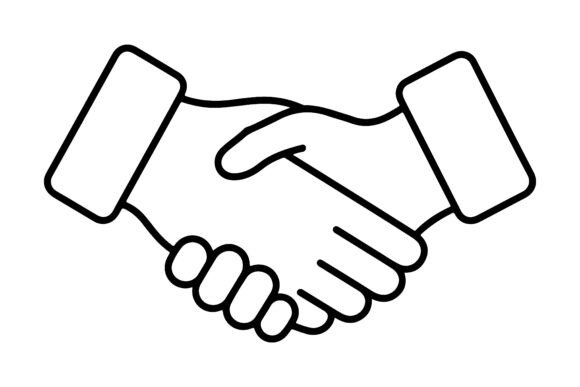
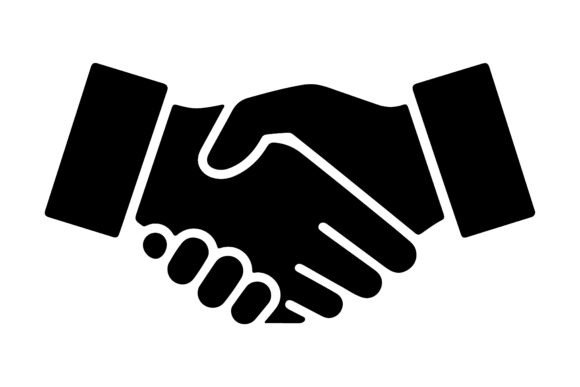
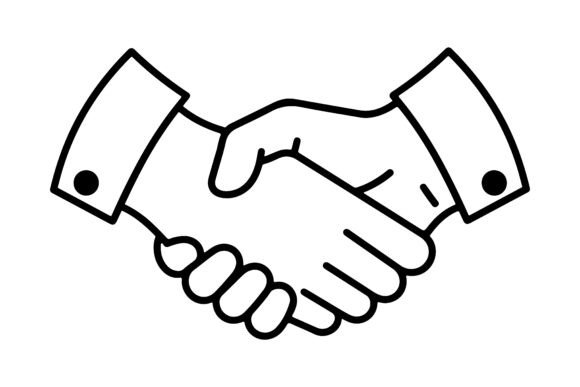
In the world of visual communication, few symbols carry as much universal weight as the handshake. It signifies trust, mutual benefit, partnership, and resolution. When distilled into a silhouette, this gesture becomes even more powerful—stripped of distracting details, it communicates pure intent. Global Agreement Silhouette Artwork captures this essence and packages it into a format that designers, marketers, and business professionals can rely on for a wide range of applications. Whether you are building a brand identity from scratch or refreshing an existing corporate image, this type of vector resource offers both flexibility and impact.
Why the Handshake Silhouette Remains a Cornerstone of Professional Imagery
The handshake is one of the few gestures understood across cultures. It appears in boardrooms, at international summits, in small business meetings, and even in informal partnership agreements. Its silhouette form amplifies this universality. By removing color, texture, and facial expression, the silhouette focuses entirely on the act of coming together. Global Agreement Silhouette Artwork leverages this simplicity to create designs that feel both authoritative and approachable. The result is an image that can represent everything from a signed contract to a long-term strategic alliance, without locking the viewer into a specific cultural or demographic context.
For businesses operating in multiple countries or industries, this neutrality is invaluable. A single silhouette can appear on a website header, a printed brochure, and a slide deck without feeling out of place. It does not age quickly, nor does it tie a brand to a fleeting trend. This makes it a cost-effective investment for any organization that values consistent, professional visuals.
Technical Advantages That Matter in Real-World Projects
When you choose a vector-based Global Agreement Silhouette Artwork, you are not simply buying an image. You are acquiring a flexible asset that adapts to your workflow. The EPS 10 format, for instance, is a standard in professional design environments. It allows you to open the file in Adobe Illustrator or similar software and manipulate every anchor point. Need to adjust the thickness of the arms? Change the spacing between the hands? Modify the curve of the fingers? All of this is possible because the artwork is built from mathematical paths, not fixed pixels.
The inclusion of a JPG file alongside the EPS ensures that you have a ready-to-use raster version for quick previews or for situations where vector editing is not required. The ZIP archive keeps everything organized, which matters when you are juggling multiple assets for a single project. And with a resolution of 300 DPI, even the JPG version holds up well for print applications. Many designers overlook the importance of resolution until they try to scale a low-res image for a banner or poster. With this artwork, you avoid that frustration entirely.
RGB Color Mode and Its Practical Implications
One detail worth noting is the RGB color mode. While CMYK is often associated with print, RGB is the standard for digital screens. Most modern workflows involve designing on screen first, then converting for print if needed. Starting with an RGB file means the colors will look vibrant and accurate on monitors, tablets, and projectors. If you do need to print, converting from RGB to CMYK is straightforward in design software. The Global Agreement Silhouette Artwork gives you the flexibility to work across both mediums without starting over.
How This Artwork Fits Into Different Industries and Use Cases
The beauty of a silhouette is its adaptability. Consider a tech startup creating its first pitch deck. The founders might place the handshake silhouette on the slide that discusses their partnership strategy. It signals stability and collaboration without needing a lengthy explanation. In a legal firm’s website, the same silhouette could appear alongside a call to action for client consultations, reinforcing the idea of trust and confidentiality. For a global nonprofit, the image might represent collaboration between international stakeholders working toward a common goal.
In marketing and advertising, the Global Agreement Silhouette Artwork can serve as a recurring visual motif. A series of brochures, each covering a different aspect of a company’s operations, could feature the silhouette in various sizes and positions, creating a cohesive brand language. The vector format makes this repetition easy because you can scale the image from a tiny icon to a full-page graphic without any loss in quality.
Even in internal communications, the artwork has a role. Employee handbooks, training materials, and onboarding presentations often need visuals that convey professionalism and cooperation. A handshake silhouette can break up text-heavy pages and make the content more approachable. It also reinforces the company’s values without being preachy.
Customization Options That Put You in Control
Because the file is fully editable, you are not limited to the original colors or layout. Changing the color is simple: select the shape in Illustrator and apply a new fill. This means you can match the silhouette to your brand palette instantly. You can also rotate it, flip it, combine it with other shapes, or add a background texture. Some designers overlay the silhouette on a world map to emphasize global reach. Others place it inside a circular badge for a seal-like effect. The possibilities are limited only by your creativity and software skills.
If you need to use the artwork across multiple platforms, the vector format ensures consistency. A logo on a website will look identical to the same logo embroidered on a polo shirt, because the same vector file can be scaled and exported for each use case. This eliminates the guesswork and inconsistency that often plagues branding efforts.
Practical Considerations Before You Download
Before incorporating any Global Agreement Silhouette Artwork into your projects, take a moment to think about your specific needs. Consider the primary medium where the image will appear most often. If it is digital, make sure the file format and resolution align with your platform’s requirements. If print is the priority, verify that your software can handle the conversion from RGB to CMYK effectively. The 300 DPI resolution of the provided JPG gives you a solid starting point for print, but always test a sample before committing to a large run.
Another factor is the style of the silhouette itself. Some handshake silhouettes are highly detailed, showing individual fingers and wrist contours. Others are more minimalist, focusing on the overall shape. The product described here strikes a balance—bold enough to read at a small size, yet detailed enough to look professional when enlarged. This balance is crucial for versatility. An overly complex silhouette can become muddy when reduced, while an overly simple one may lack the sophistication needed for corporate branding.
You should also consider the audience. In some contexts, a handshake might be interpreted differently depending on cultural norms. While the gesture is widely recognized as positive, being mindful of your specific audience is always wise. For truly global campaigns, pairing the silhouette with neutral colors and simple typography can help ensure broad appeal.
File Management and Backup Best Practices
Once you receive the ZIP file containing the EPS and JPG, take a moment to organize your digital assets. Create a dedicated folder for your vector resources and label the files clearly. This might seem like a small step, but when you are working on a tight deadline, knowing exactly where your high-res silhouette lives can save precious time. Keep the original EPS untouched and make copies for any modifications you plan to do. This way, you always have a clean version to fall back on if your edits go in a direction you do not like.
If you collaborate with a team, consider storing the vector file in a shared cloud drive with version control. This allows multiple designers to access and use the same asset without creating conflicting copies. Consistency across a team is one of the main reasons to use standardized vector artwork in the first place.
Why Professional Designers Choose Vector Silhouettes for Branding Projects
Vector graphics have long been the preferred choice for logo creation and corporate identity work. They offer infinite scalability, small file sizes compared to high-resolution raster images, and the ability to edit individual components. When you combine these technical benefits with a universally understood symbol like the handshake, you get a tool that can form the backbone of a visual identity. Global Agreement Silhouette Artwork is not just an image—it is a building block for communication.
Designers who work with startups appreciate the low cost and high impact of vector assets. Instead of hiring a photographer or illustrator for a custom handshake image, they can modify an existing silhouette to fit the brand’s aesthetic. This accelerates the design process and keeps budgets manageable. For freelancers, this efficiency translates into faster turnaround times and happier clients.
In educational settings, instructors use handshake silhouettes to teach students about symbolism, composition, and vector editing. The simple shape allows beginners to practice color changes, scaling, and alignment without getting lost in complex details. More advanced students can experiment with combining the silhouette with other vector elements to create original compositions.
Final Thoughts on Integrating This Artwork Into Your Workflow
The decision to use Global Agreement Silhouette Artwork ultimately comes down to how well it aligns with your project goals. If you need a clean, professional, and editable symbol that communicates partnership and trust, this is a strong candidate. Its compatibility with industry-standard software like Adobe Illustrator means you can start editing within minutes of downloading. The included formats cover both digital and print needs, and the high resolution ensures that your final output looks polished.
Whether you are designing a logo for a new venture, creating marketing materials for an established company, or building an internal brand toolkit, a well-crafted handshake silhouette can carry significant weight. It does not require translation, it does not rely on fleeting design trends, and it speaks directly to the idea of two parties coming together in agreement. By choosing a vector silhouette that you can customize freely, you gain control over how that message is presented across every touchpoint.
As you move forward with your project, keep the silhouette as a central visual element or use it sparingly for maximum impact. Either approach works because the design itself is strong enough to stand alone. With the right placement and thoughtful integration, Global Agreement Silhouette Artwork can become a recognizable part of your brand’s visual language, reinforcing your message of trust, cooperation, and shared success.