Four Step Infographic Brush for Visual Storytelling
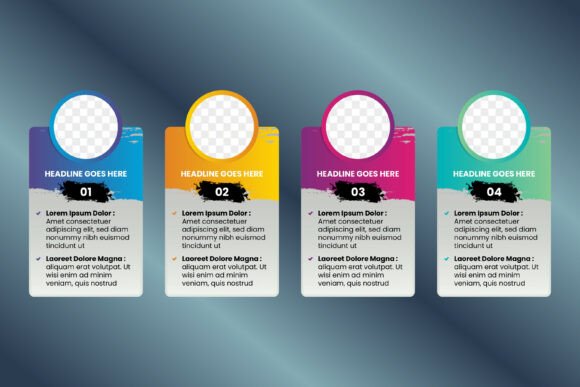
Communicating a sequence of ideas clearly and beautifully is a challenge every creative professional faces. Whether you are mapping out a workflow, explaining a process, or guiding an audience through a journey, the visual structure you choose can make or break comprehension. The Four Step Infographic Brush offers a watercolor splash design that blends artistic flair with structured clarity, giving you a tool that feels both expressive and organized. This set is built for those who want to move beyond rigid, corporate-style graphics and toward something that feels handcrafted yet professional. With high resolution at 300dpi and fully vector files, you have the flexibility to adapt every element to your exact needs without losing quality.
What makes this resource particularly useful is how it balances creative freedom with practical constraints. The four-step format is one of the most natural rhythms for storytelling, instruction, or persuasion. People can easily follow four stages, remember them, and apply them. By wrapping that structure in watercolor textures and brush-inspired shapes, you soften the visual tone without sacrificing legibility. This is not just a template — it is a starting point for countless variations, each suited to a different audience, platform, or purpose.
What the Four Step Infographic Brush Brings to Your Work
At its core, this infographic set provides a ready-made framework that you can customize in minutes. The files come in Ai, EPS, JPG, and SVG formats, so you can work in your preferred software environment. The vector nature of the graphics means you can scale them from a small social media card to a large poster without any pixelation. Editable text, shapes, and color allow you to match your brand guidelines or experiment with new palettes. The watercolor splash design adds a tactile, organic feel that stands out in a sea of flat, minimalist graphics.
For designers, this means less time building structure from scratch and more time refining details. The brush-style elements create a sense of movement and flow, which is ideal for processes that involve growth, transformation, or sequential action. The splashes and washes of color can be used to frame each step, connect them visually, or serve as background accents. Because everything is well organized within the files, you can quickly locate and edit each component without digging through layers of unnamed elements.
Creative Possibilities and Real Applications
Think about the different ways a four-step sequence appears in everyday content. A fitness brand might outline a progression from warm-up to cool-down. A cooking blog could break a recipe into preparation, cooking, plating, and serving. A business coach might map out a client journey from awareness to retention. In each case, the Four Step Infographic Brush can be adapted to match the tone and energy of the subject. The watercolor style works particularly well for lifestyle, wellness, education, and creative industries because it feels approachable and human.
For marketers, this infographic style can elevate social media posts, email headers, and landing page visuals. Instead of a plain numbered list, you can present the same information as a visual narrative. The brush strokes and splashes add texture that catches the eye in crowded feeds. When used in presentation slides, the watercolor elements reduce the formality of bullet points and make complex information feel more digestible. Bloggers can insert these graphics between sections to break up text and reinforce key takeaways.
Entrepreneurs and small business owners often need to explain their process quickly. A service-based business, for instance, could use the four steps to show how they go from consultation to delivery. This builds trust and sets clear expectations. The editable text lets you tailor the language to your specific offer, and the vector shapes allow you to rearrange the layout to fit your brand identity. The result is a polished piece of communication that looks like it was created by a dedicated design team.
Adapting for Different Audiences and Platforms
Not every audience responds to the same visual language. The Four Step Infographic Brush gives you room to adjust style and complexity based on who you are addressing. For a younger, design-savvy audience, you can push the watercolor effects further, using bold splashes and contrasting hues. For a more conservative corporate audience, you can tone down the textures, use muted colors, and keep the layout clean while still retaining the organic feel.
On platforms like Instagram or Pinterest, where visuals are everything, the watercolor splash design can be used as a hero image. You might extract a single step and pair it with a brief caption, then link back to the full infographic on your blog. On LinkedIn, a more refined version of the same graphic can accompany a thought leadership post. By reusing the same base template with different color schemes and text, you maintain consistency across channels without creating extra work.
Educators and trainers can use the four-step format to break down a lesson or workshop module. Each step becomes a visual anchor that students can refer back to later. The watercolor backgrounds add warmth to presentation slides, making remote learning feel less clinical. Hobbyists and creators who run online courses or digital products can also benefit from this asset. A simple four-step graphic can serve as a freebie or lead magnet, offering value while showcasing your visual style.
Keeping Results Clear and Effective
When working with artistic elements like watercolor splashes, there is always a risk of overwhelming the content. The key is to let the structure guide the eye. Keep each step distinct by using enough contrast between the background and the text. The editable shapes allow you to adjust opacity and size, so you can dial the texture up or down depending on the importance of readability. If your text is dense, consider placing it in a solid or semi-solid area within the splash rather than over the most textured parts.
Consistency across steps also matters. Use the same brush style, color palette, and spacing for all four sections so the infographic reads as a unified piece. If you change one element too drastically, the flow can feel disjointed. The vector format makes it easy to duplicate and adjust each step while preserving the overall harmony. Test your graphic on different screen sizes and in print if you plan to use it offline. The 300dpi resolution gives you professional print quality, but always preview at actual size to ensure the watercolor details remain crisp.
Another practical tip is to limit the amount of text per step. Each block should communicate one idea clearly. Use short phrases or single sentences, and rely on the visual hierarchy created by the watercolor elements to guide attention. If you need to provide more detail, pair the infographic with a supporting paragraph in your blog post or presentation notes. This keeps the graphic itself scannable and memorable.
Ideas for Variations and Custom Styles
You can extend the usefulness of this set by creating multiple variations from the same base files. For example, design a version with warm sunset tones for a motivational post, a cool blue-green palette for a wellness topic, and a neutral monochrome scheme for a professional guide. The splash elements can be rotated, flipped, or combined to give each version a fresh look without starting over. You might also use the brush strokes as decorative dividers between sections of a longer document or as accent elements on a website.
Another approach is to use the infographic as a template for client projects. If you are a freelancer or agency owner, you can present this style as an option for clients who want a more artistic direction. The editable text and colors make it easy to adapt to different brands, and the vector format ensures high-quality deliverables. Over time, you can build a library of variations that demonstrate your range while maintaining a consistent visual thread.
For those who enjoy experimenting, try layering the watercolor splashes with other textures or patterns. The vector files allow you to combine the brush elements with geometric shapes, line art, or photography. This hybrid approach can produce unique results that feel both contemporary and timeless. Just remember to keep the four-step progression clear so that the message does not get lost in the design.
Practical Recommendations for Your Next Project
Start by defining the core message you want to communicate. Map out the four steps as simply as possible. Then open the file and begin adjusting the text, colors, and layout to match your content. Use the watercolor splashes as framing devices, not as the main focus. The goal is to enhance understanding, not to distract from it. Preview your work on the platform where it will appear and ask a colleague or friend if the sequence makes sense at a glance.
If you are designing for a team or organization, create a style guide that shows how the Four Step Infographic Brush should be used across different materials. Specify color hex values, font choices, and acceptable variations. This ensures that everyone who uses the template maintains a cohesive brand presence. The organized file structure in the download makes it simple to hand off to other designers or to non-designers who need to make quick updates.
Finally, remember that the best infographics do not just look good — they make information easier to process. The watercolor splash design adds personality, but the real value lies in how clearly you present each step. Use this tool to create visuals that your audience will actually want to read, share, and remember. Whether you are a seasoned designer or someone exploring visual content for the first time, this set gives you a solid foundation to build upon. With a little experimentation and attention to detail, you can produce work that is both beautiful and effective.